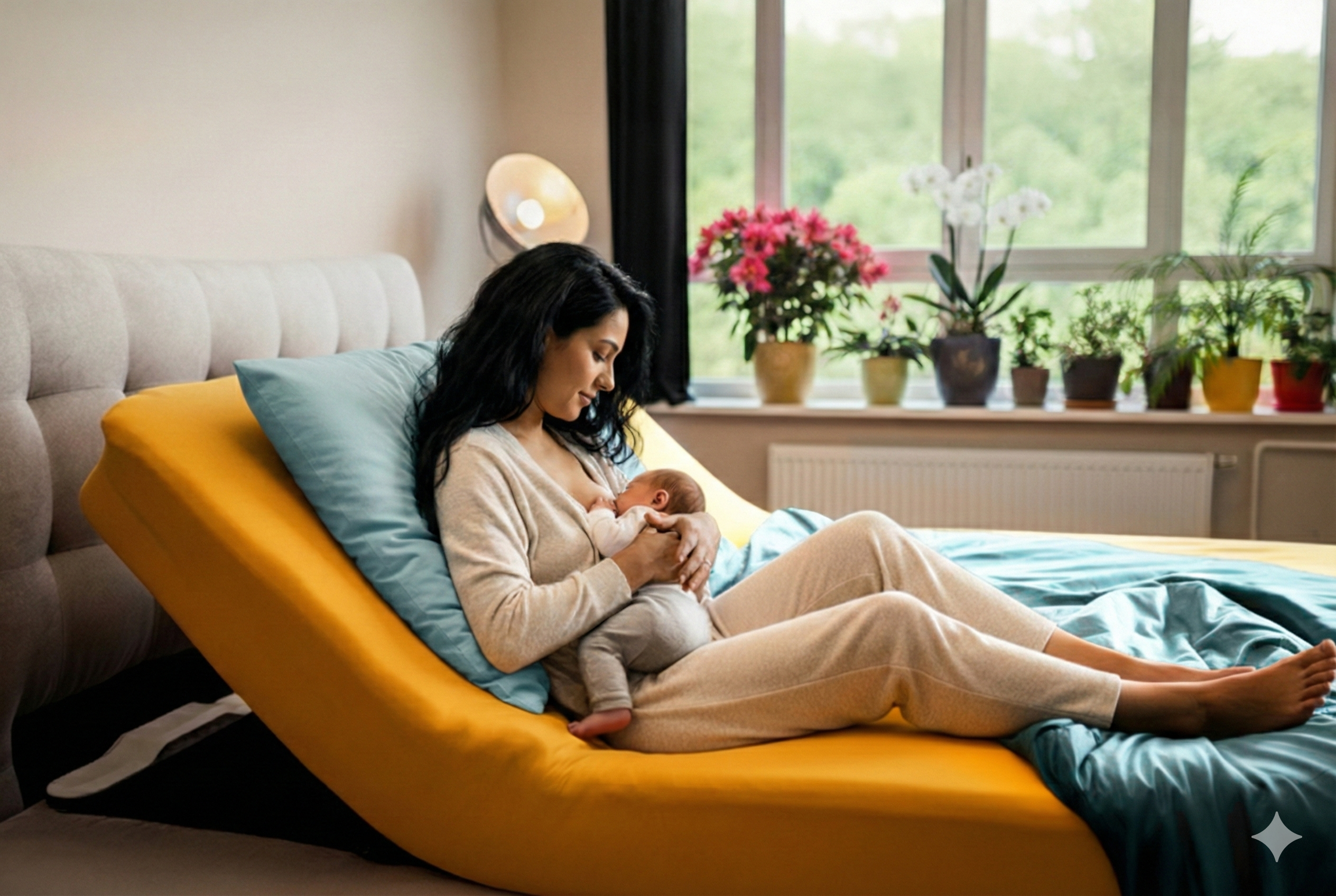
After a cesarean, many mothers find that breastfeeding in a slightly elevated position relieves pressure on the abdomen and facilitates movement. A gentle tilt of the bed can make the first weeks much more comfortable.
1. Why is breastfeeding more difficult after a cesarean?
After a cesarean, the scar area is sensitive.
Sitting abruptly, bending, or maintaining a static position can be tiring or painful.
Feedings sometimes last a long time, and posture plays an essential role in comfort.
Many mothers feel:
- tension on the scar when getting up
- difficulty finding a stable position
- back or shoulder pain
- faster fatigue in a classic sitting position
A semi-seated position, stable and gentle on the abdominals, becomes very useful.
2. Why does the slightly inclined position help?
A slight incline of the upper body:
- reduces the effort to straighten up
- avoids direct pressure on the abdomen
- supports the spine
- allows freer breathing
- helps to hold the baby more naturally
You don’t need to sit at 90°.
A moderate angle is often more comfortable and less tiring.
3. How to find the right breastfeeding posture after a cesarean?
Here’s what many mothers recommend:
- keep the upper body elevated
- place a nursing pillow to support the baby, but not to support your own weight
- avoid sudden movements or twists
- keep feet on the ground or on the bed to help stabilize the pelvis
The priority: your posture should not pull on the scar.
4. Why not use just pillows?
Pillows can slip, sag, or create too steep an angle.
They support the baby, but rarely your overall posture.
An elevation of the mattress provides uniform, stable, and constant support — very useful when every movement can be sensitive.
5. How can CosyLift help after a cesarean?
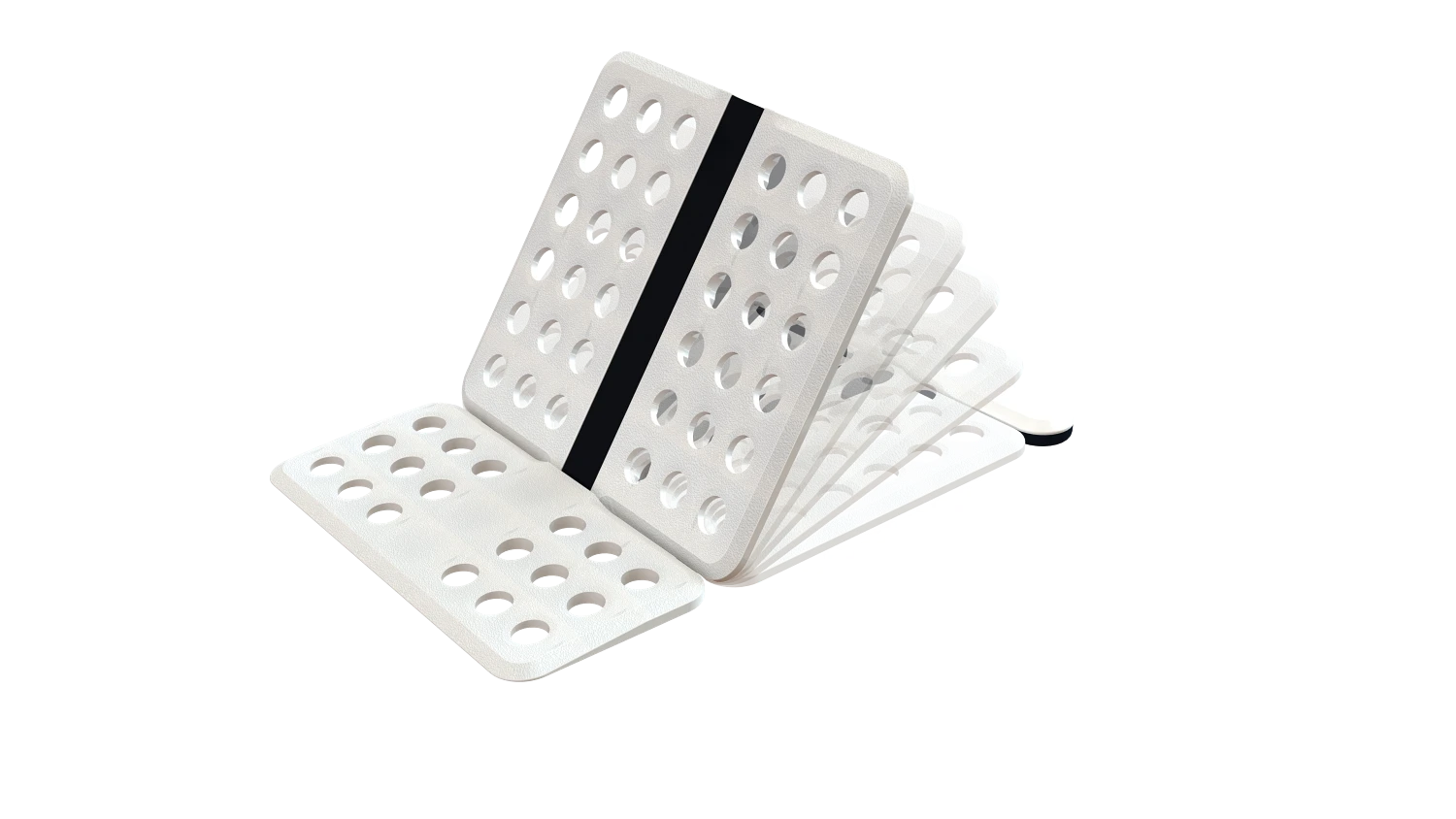
CosyLift can gently raise the top of the mattress, allowing:
- to settle in gently
- to avoid contracting the abdominals to sit
- to immediately find a comfortable position to breastfeed
- to reduce pressure on the scar
- to have more restful nights, even with frequent wake-ups
It’s a simple solution for experiencing breastfeeding and rest with less pain.
6. What angle is recommended after a cesarean?
Most young mothers find an angle between 10 and 25 degrees comfortable.
This avoids folding in half or standing completely upright.
The important thing is to be able to breathe freely, support the back, and not strain the scar.
7. Can this position also help with rest?
Yes.
Many women who have had a cesarean sleep slightly elevated at first, because:
- turning becomes easier
- back pain is reduced
- breathing is smoother
- micro-wake-ups for the baby require less effort
It is often a reassuring and comfortable position during the first weeks.
FAQs
Q: Does the semi-seated position slow down healing?
No. As long as the posture does not pull on the scar, it can even reduce discomfort.
Q: Should I avoid certain positions?
Positions where you have to lean forward or strain the abdominals should be avoided at first.
Q: Is the baby well supported in this position?
Yes, especially if you combine the incline with a nursing pillow.
Q: Can I raise only my side of the bed?
Yes, CosyLift works on one side if necessary.
Q: How long is this position useful?
Some mothers use it for a few weeks, others for a few months, depending on comfort and recovery.