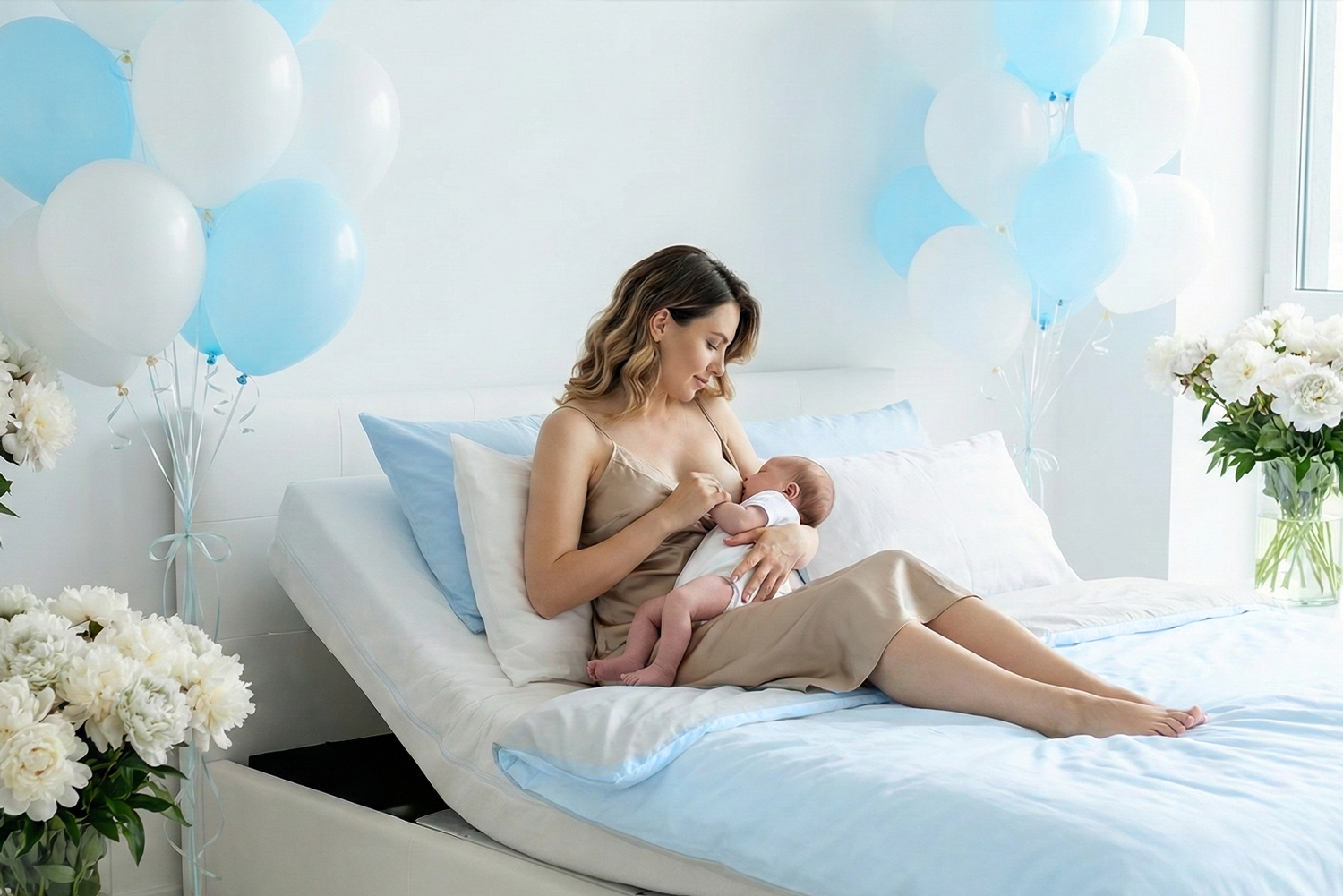
For night feedings, a slightly elevated and stable upper body position is often more comfortable than a pile of pillows. It helps support posture, reduces fatigue, and makes nights easier.
1. Why are night feedings more difficult to manage?
At night, everything is more complicated: you’re tired, you have less muscle tone, and often try to breastfeed without moving too much so as not to fully wake up or disturb your partner.
Young mothers often describe:
- a lack of back support
- the feeling of sliding in the bed
- pillows that move or flatten
- shoulder or neck pain
- difficulties in repositioning between feedings
Having a stable position from the start greatly changes the quality of the night.
2. Why doesn’t the pile of pillows always work?
Pillows seem like a simple solution, but they constantly move.
They also create irregular angles: too high, too low, not inclined enough.
Often, in the middle of the night, the perfect stack from the evening has turned into an uncomfortable setup that requires repositioning.
And the more you reposition, the more you wake up — and the more the baby wakes too.
3. How can a slight bed incline help?
A gentle elevation of the mattress creates a regular, stable, and uniform angle.
This allows:
- supporting the upper body effortlessly
- staying in a semi-seated position for longer
- reducing tension points in the back
- keeping the arms free to hold the baby
- falling back asleep more easily after feeding
It’s a position that naturally accompanies the body, without needing adjustments.
4. What is the ideal angle for night feedings?
Most mothers find that an angle between 10 and 20 degrees is perfect at night.
This:
- keeps the chest slightly raised
- prevents sliding
- supports the spine
- reduces muscle fatigue
It’s inclined enough to be comfortable, but not to the point of feeling like sitting on a chair.
5. How does CosyLift simplify night feedings?
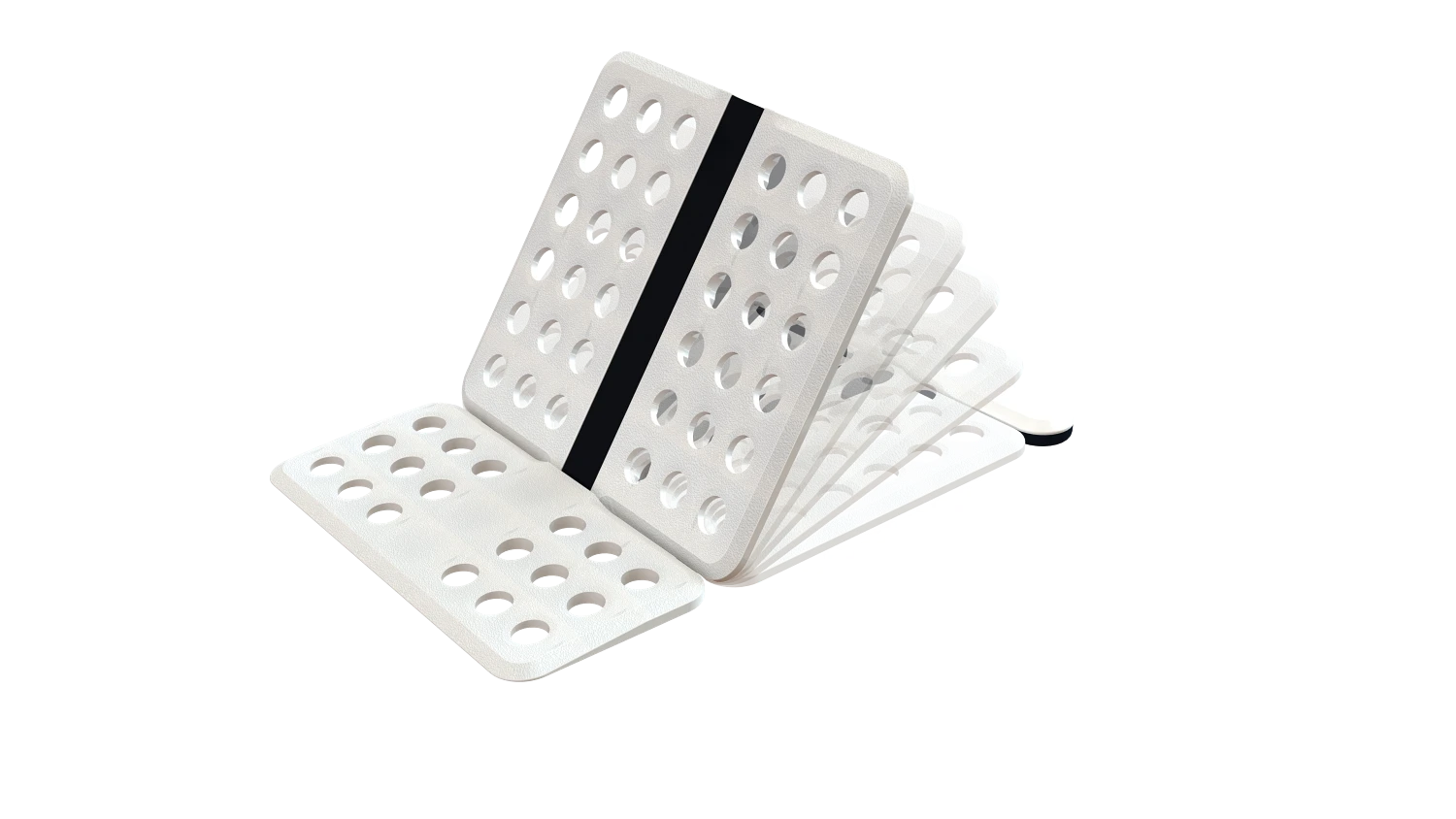
CosyLift elevates the mattress in seconds and maintains the same incline all night.
It helps nursing mothers:
- settle more easily
- maintain a stable posture without pillows
- reduce strain in the lower back
- avoid fully waking up to reposition
- handle several feedings with less fatigue
It’s a gentle way to make sleep more comfortable, even with multiple awakenings.
6. Does this position also help put the baby back to sleep?
Yes.
A stable posture helps keep the baby well supported, which facilitates:
- calmer feedings
- fewer sudden movements
- quicker return to sleep
- a soothing environment for the whole family
When the mother is comfortable, the baby often is too.
7. Is this position suitable for co-sleeping?
Yes, as long as all co-sleeping safety rules are followed.
Many mothers find that a slight incline:
- makes it easier to access the baby
- avoids having to sit up completely
- reduces the effort to lean or get up
It’s a practical option for short, repetitive nights.
FAQs
Q: Should I use a nursing pillow even with a bed incline?
Yes, it can help support the baby, but it will no longer be what supports your posture.
Q: Does this prevent turning over during the night?
No, the incline is gentle and allows for natural movement.
Q: Does it disturb the partner?
CosyLift can elevate only your side of the bed if necessary.
Q: Is this recommended for tired or sleep-deprived mothers?
Yes, a stable posture reduces muscle effort, helping to better handle night awakenings.
Q: Can this position be used after the breastfeeding period?
Of course. It remains comfortable for reading, resting, or watching TV in bed.