
1. Why can co-sleeping breastfeeding become uncomfortable?
Co-sleeping makes nighttime feedings easier, but it can also lead to:
- back pain
- uncomfortable shoulder support
- twisted positions to reach the baby
- frequent awakenings to reposition
- difficulty finding a semi-sitting angle in a shared space
Settling into a good posture becomes essential to maintain the mother’s comfort and the baby’s safety.
2. Why is a semi-sitting posture more difficult in co-sleeping?
In a shared bed, mothers often try to:
- not disturb their partner
- keep the baby within reach
- sit up without moving the whole bed
- stay discreet during nighttime feedings
Result: they adopt unstable postures, often leaning or twisted, which quickly leads to fatigue.
3. How does a gentle mattress incline facilitate co-sleeping?
A slight incline of the mattress allows:
- to remain in a semi-sitting position effortlessly
- to limit sudden movements at night
- to support the back and shoulders
- to have the baby more easily accessible
- to reduce muscle fatigue
This allows for more natural nursing while preserving everyone’s sleep.
4. What angle is ideal for comfortable co-sleeping nursing?
An angle between 10 and 15 degrees works very well for:
- preventing slipping
- reducing back tension
- supporting the shoulders
- maintaining a stable and calm posture
The incline should remain gentle so as not to disturb the baby or the partner.
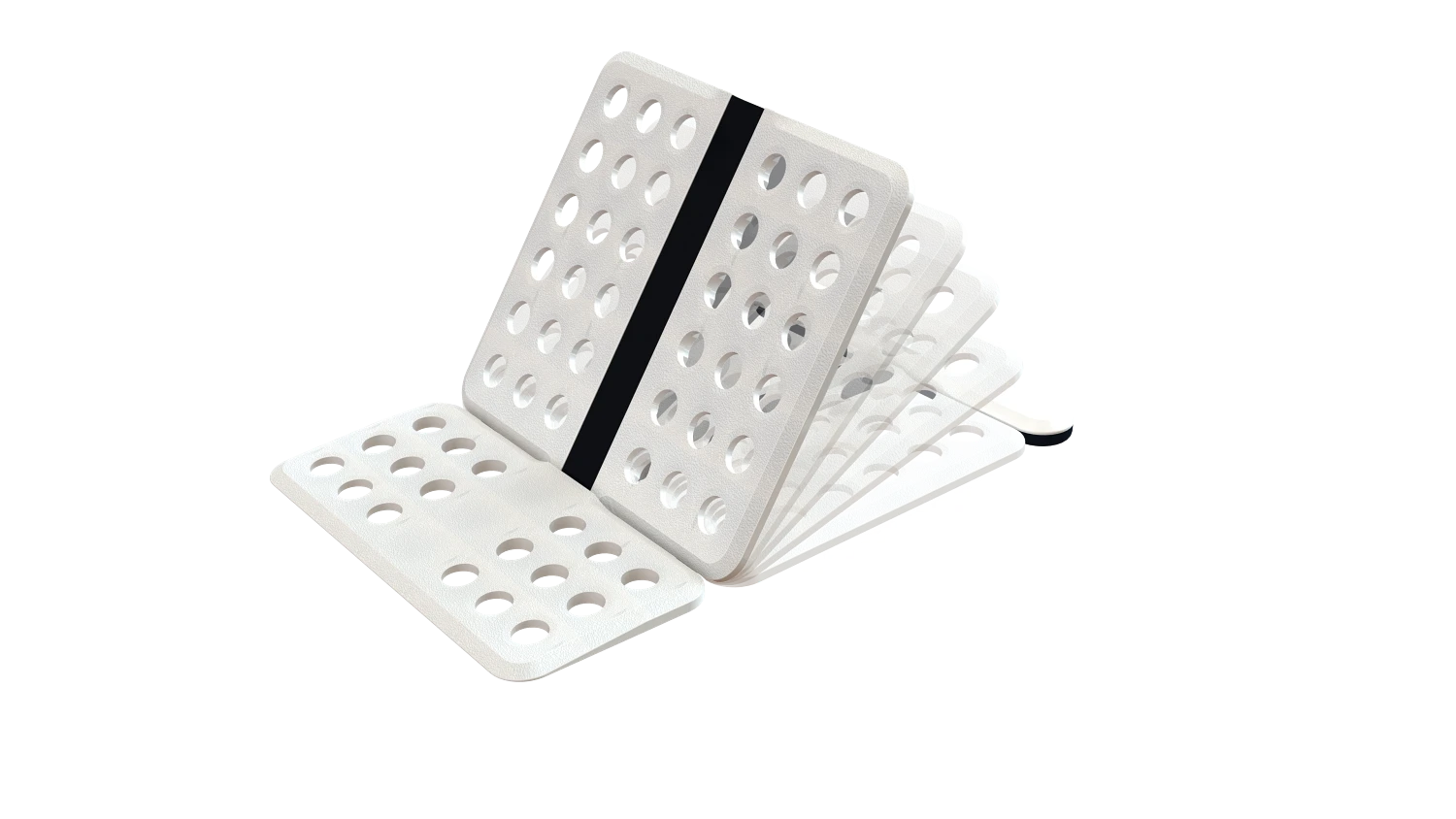
5. How does CosyLift facilitate breastfeeding in co-sleeping?
CosyLift is particularly useful in co-sleeping because it:
- raises one side of the bed if needed
- allows the mother to settle without affecting the partner’s position
- creates a stable incline only where it’s necessary
- supports the body without adjusting multiple pillows
- reduces fatigue during repeated nighttime feedings
This makes nursing smoother and more comfortable, while preserving the tranquility of the shared bed.
6. Some additional tips for comfortable co-sleeping
To maximize comfort:
- keep a nursing pillow within reach
- avoid overly thick pillows that tilt the chest
- keep a small dim light for repositioning without waking everyone
- ensure the baby is placed safely
The mother’s comfort also promotes the baby’s calm.
7. Does this posture also help to fall back asleep quickly?
Yes.
When the posture is already good, it’s easier to fall back asleep after feeding:
- fewer movements to make
- less muscle pain
- a more stable breathing
- an immediate feeling of relaxation
Stability greatly aids falling asleep.
FAQs
Q: Is mattress inclination compatible with co-sleeping?
Yes, as long as the baby is placed in a secure space (co-sleeping crib or flat surface).
Q: Can I elevate only my side?
Yes, CosyLift allows targeted inclination without disturbing the partner.
Q: Is this posture useful if I bottle-feed in co-sleeping?
Yes, the posture remains the same and the comfort too.
Q: Does this reduce nighttime awakenings?
Yes, because the mother repositions less and gets less tired.
Q: Is it useful after the nursing period?
Yes, many parents continue to use the incline to read or rest comfortably.